
Writer | Author of 8.156 Billion Gazes Toward Global Peace | Founder of the Five-Continent Cultural and Peace Initiative
About Hassan Azadeh
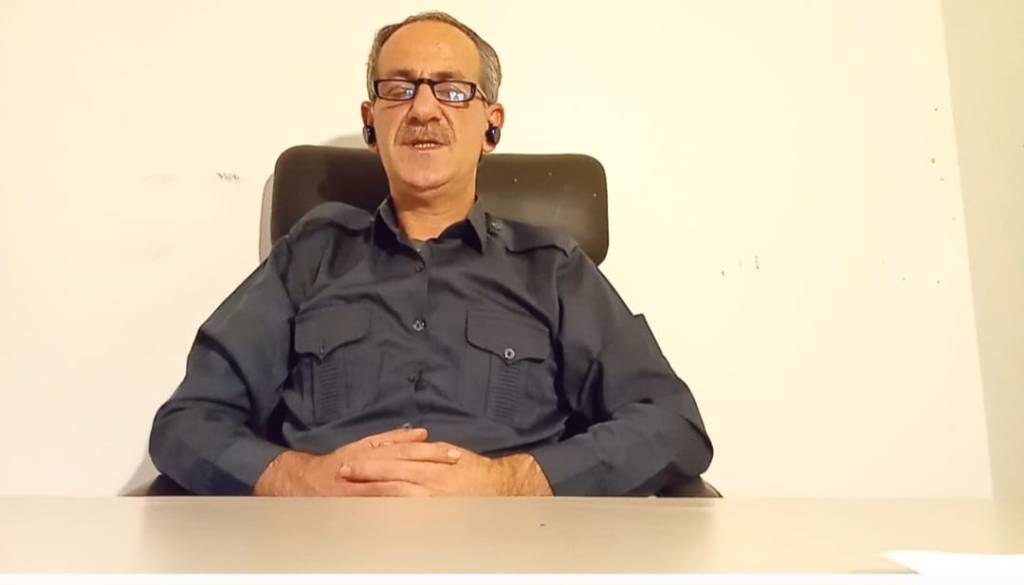
Hassan Azadeh is a Kurdish writer from Eastern Kurdistan, currently based in Switzerland. His path to literature began not in the quiet of a writing room, but amid lived experiences in which poverty, borders, displacement, asylum, and the search for safety formed part of the everyday reality of life.
Years of his youth were marked by severe economic hardship. To earn a living, like many kolbars—cross-border porters—he carried heavy loads across difficult and dangerous mountain routes. It was an experience that transformed poverty, inequality, and human vulnerability from abstract social concepts into tangible realities he had lived firsthand.
He later studied journalism and earned a qualification in the field. Before he had the opportunity to pursue journalism professionally, however, circumstances compelled him to leave his homeland.
What followed became another chapter in that human journey: migration to Turkey, repeated and perilous attempts to cross the Aegean Sea, rescue at sea, and then months of life in refugee camps in Greece—from Moria and Kara Tepe on the island of Lesbos to subsequent stages of asylum and displacement in Athens.
Among thousands of people who had come from different homelands and carried different languages, cultures, and histories, one aspiration transcended those differences: to reach a place where they could live without fear.
That experience transformed Azadeh’s understanding of peace. Peace was no longer a word belonging primarily to speeches and official documents. Peace could mean a home one is not forced to abandon; a school a child can enter in safety; a world in which a woman can live free from violence and discrimination; and a land where the future of both humanity and nature is not sacrificed to war and destruction.
From a Refugee’s Notes to the Beginning of a Literary Journey
Hassan Azadeh’s journey as a writer began during his years in refugee camps.
He recorded in notebooks what he witnessed, what he experienced, and the stories of the people living around him—not initially with the intention of publishing a book, but so that one day he could look back and remember the road he had travelled.
Then a question from his son, Mohammad, changed the course of those notes.
Seeing how much his father had written, Mohammad asked why he wrote so much and whether what he had already written was enough to become a book.
It was a simple question, yet a decisive one. From that moment, notes intended only to preserve the personal memory of a life gradually began to find their way into literature.
Years later, another question from Mohammad would help give rise to a different work. While watching images of war, bombardment, and destruction, he asked his father why he himself could go to school in safety while children elsewhere in the world had to live amid war and devastation.
From that question emerged the idea for 8.156 Billion Gazes Toward Global Peace.
Works and Literary Journey
Hassan Azadeh’s writing has not been confined to a single work or subject. Experiences of migration, asylum, identity, memory, humanity, and the search for peace have found expression across a body of work written and published in several languages, forming different dimensions of his literary world.
His works include Like a White Crane, in Persian and English; The Refugee of Room K-104, in Kurdish and English; The City of Dreams, in Kurdish and English; The Grass Grows Back on Its Own Roots, in Kurdish and English; Sunset, in Persian and English; and From Piranshahr to Zurich, in Kurdish and Persian.
This literary path later led to 8.156 Billion Gazes Toward Global Peace, a work conceived with a global perspective and prepared in Kurdish, Persian, and English, with the Kurdish edition currently approaching publication.
This linguistic diversity is more than the transfer of words from one language into another. It reflects a journey that has connected Azadeh’s life and writing across languages, cultures, and geographies. For him, literature is not merely a means of narrating the past, but a bridge for entering into dialogue with people beyond linguistic and geographical boundaries.
One Writer, One Narrator, and a Gaze Toward the World
In 8.156 Billion Gazes Toward Global Peace, Hassan Azadeh is the writer, while Mohammad—his son, and the same child introduced elsewhere on this website—is the narrator and the principal inspiration behind the narrative.
Their partnership has come to represent something beyond a literary collaboration between father and son. It is a dialogue between two generations about a world shaped by one generation and inherited by the next.
The figure 8.156 billion in the title of the book arises from this same universal perspective. It refers to the number of people living on Earth at the time the idea for the work took shape. The message of the book is therefore not addressed to one nation, one geography, one religion, or one culture. Its gaze is directed toward all the people of this planet.
Peace stands at the heart of this vision, but in this work, peace means more than the absence of war.
This vision regards ending wars and protecting human life, safeguarding the rights and futures of children, advancing the dignity and safety of women, protecting the environment, expanding access to education and healthcare, and placing knowledge and technology at the service of human life as interconnected dimensions of a shared global responsibility.
For a world in which war has ended, yet children remain deprived of a future, women continue to face violence and discrimination, and the environment remains a casualty of human neglect, would still stand far from the deeper meaning of peace.
From Literature to International Dialogue
After settling in Switzerland, Hassan Azadeh continued his literary journey and joined PEN Switzerland, while also maintaining his literary membership and engagement with the Kurdish PEN community in Germany.
From 8.156 Billion Gazes Toward Global Peace, another stage of this journey emerged: the Five-Continent Cultural and Peace Initiative.
The purpose of this initiative is not to present a book as a solution to the problems of the world. No literary work, on its own, can end wars or resolve the great humanitarian crises of our time. Its purpose is more modest, yet no less serious: to bring a voice into the wider conversation—the voice of a child who has himself experienced part of the refugee journey and who now asks the adult world about the future awaiting other children.
For this reason, the initiative seeks to bring the book’s message, through cultural, humanitarian, diplomatic, and international channels, to individuals and institutions whose work or influence touches upon peace, human rights, the protection of children and women, and the environment.
These engagements should not be understood as endorsements of the book or as political support from the individuals or institutions concerned. Rather, they form part of an independent effort to create space for dialogue, attention, and shared responsibility.
Supporting the Continuation of This Journey
If an initiative of this kind is to move beyond the limits of a website and an individual effort and develop a professional international presence, ideas and determination alone are not enough. It also requires real and sustainable financial resources.
The international development of the project, translation and publication of its works, collaboration with cultural specialists and advisers, professional networking, media engagement, travel and participation in relevant events, professional content production, and the expansion of the project’s international network all require meaningful financial support.
Hassan Azadeh and this initiative therefore welcome financial support, sponsorship, and backing from foundations, institutions, humanitarian organizations, and private supporters who consider the project’s humanitarian aims worthy of support.
Such support is sought neither to purchase endorsement nor to create political dependency. Its purpose is to provide the professional resources necessary for the project to continue and expand while preserving its intellectual and literary independence.
From Experience to Words, From Words to Responsibility
Hassan Azadeh’s journey—from carrying loads across mountain routes, through migration and refugee camps, to becoming a writer in Switzerland—is a story marked by hardship. But hardship is not intended to be the final chapter of that story.
What matters is what can be made of experience.
Experience can be left to memory—or transformed into words.
Words can remain upon a page—or enter into dialogue.
And perhaps, through dialogue, even a small opening can cast light upon a greater responsibility.
8.156 Billion Gazes Toward Global Peace was born from that hope:
Billions of people, billions of gazes, and billions of different lives—yet one shared planet, and a shared responsibility toward peace, children, women, nature, and the generations who will inherit the world after us.
 Hassan Azadeh